Data centers are expanding, rack density is rising, and operations are getting more complex. As AI gigafactories in Europe expand, AI industry growth is adding pressure across Europe tech hubs. Yet qualified staff remain hard to recruit and hard to keep.
The Uptime Institute Global Data Center Survey 2026 shows a worsening talent gap. More than half of respondents said they had trouble finding qualified people for open roles. Turnover also stays high, and experienced staff are often hired away by other data center companies.
No tool can solve a workforce shortage. Operators still need training, clear career paths and skilled people. But they can cut the skilled time spent on repetitive physical work.
The hidden labor cost of rack installation

Installing network gear can be awkward. A technician may need to place mounting hardware, align a heavy device, hold it at the right rack unit and fasten it in a tight space.
A second person may be needed just to support the gear. Teams also lose time handling cage nuts or using different methods at different sites.
Those minutes add up across hundreds of devices. More important, they take time away from commissioning, troubleshooting, preventive maintenance and resilience.
Standard steps help small teams scale
A standard process for network rack installation gives technicians a repeatable base. It can define:
- approved mounting parts and tools;
- rack-unit placement and device orientation;
- safe support and fastening methods;
- torque and load limits;
- labeling, documentation and sign-off steps.
Consistency makes routine work easier to plan, teach and check. New team members gain confidence faster, while skilled technicians spend less time fixing improvised installs.
Setup.exe supports suitable one-person installations
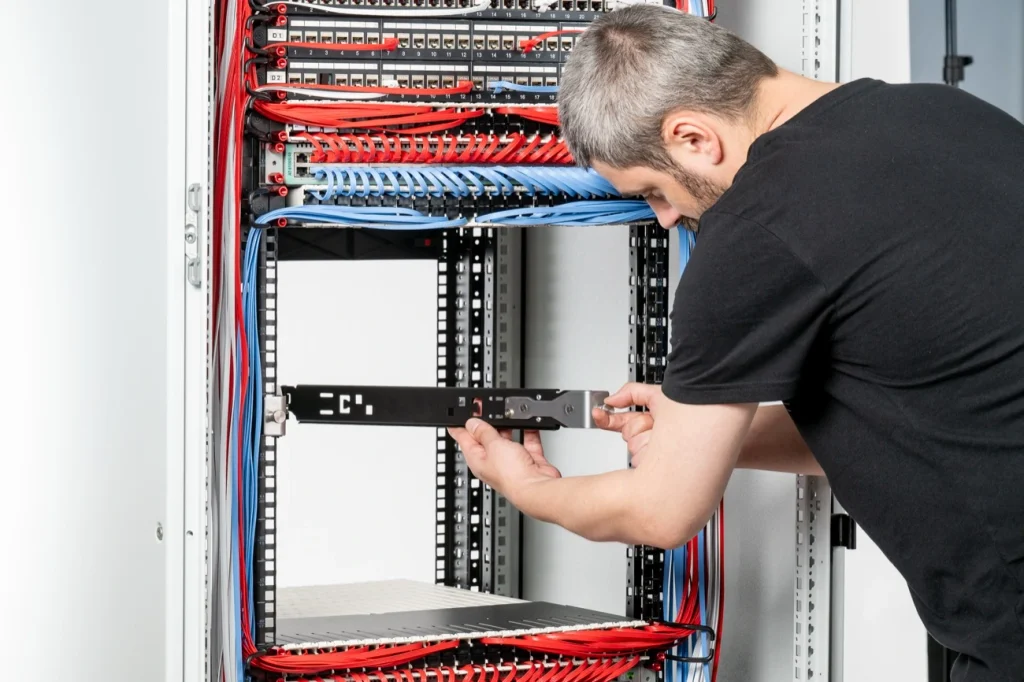
PATCHBOX Setup.exe is a mobile installation aid for 19-inch racks. It attaches to the rack rails and creates a support surface for hardware or a laptop.
The Setup.exe can hold up to 50 kilograms or 110 pounds. By supporting equipment during positioning and fastening, it may allow suitable jobs that once needed two people to be done by one technician.
Setup.exe does not replace safety steps, device-specific lift instructions or risk checks. Some devices and site conditions will still need more than one person.
/dev/mount reduces mounting time
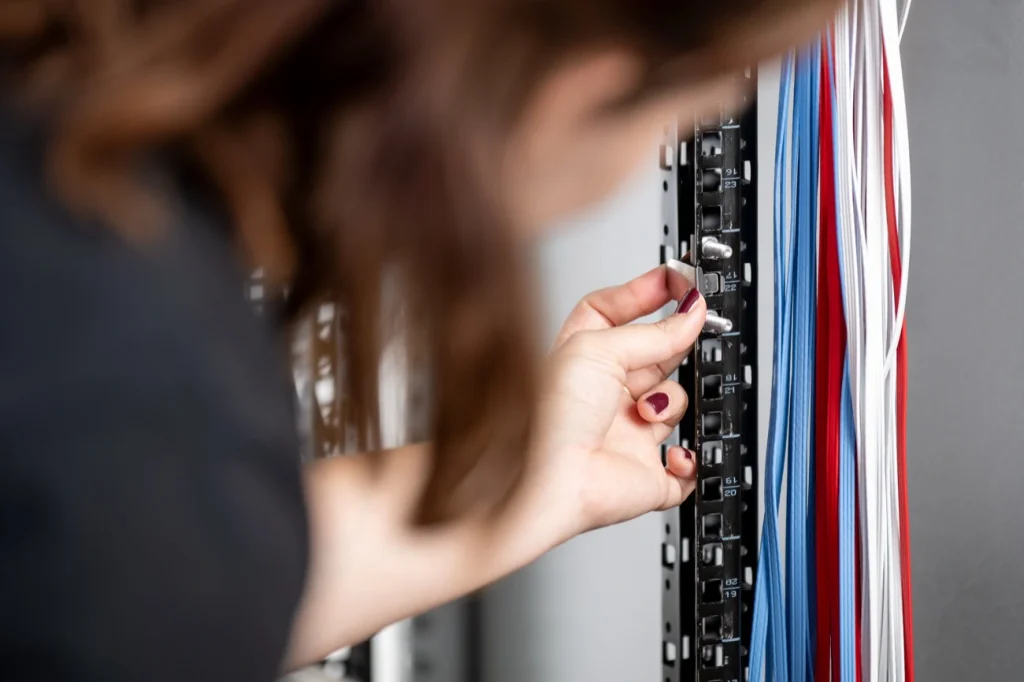
PATCHBOX /dev/mount is a tool-free alternative to regular cage nuts for square-hole, EIA-310 rack rails.
The part snaps into the rail and gives two threaded mounting points within one rack unit. PATCHBOX says fastening can be up to three times faster than with traditional cage nuts.
The gain is not only speed. A standard mounting part can also:
- remove the need for a cage-nut insert tool;
- simplify alignment within a rack unit;
- reduce variation between technicians and sites;
- make the process easier to teach and repeat.
Teams must still follow published fit, load and torque limits.
Protect skilled time for higher-value work
Faster installation frees technicians to test redundancy, check alarms, maintain critical systems, document changes and mentor colleagues.
Tools alone will not improve retention, but reducing awkward work and standardising processes can improve working conditions. Start by measuring common tasks, defining approved methods and piloting them at one site.
As Europe’s AI factories grow and staffing remains tight, operators must invest in people and reduce avoidable friction. Setup.exe can support suitable one-person installations, while /dev/mount can reduce time and tool use. Combined with standard procedures, they free scarce expertise for work that needs it.